When sound alters states of consciousness: from neuroscience to brand experience
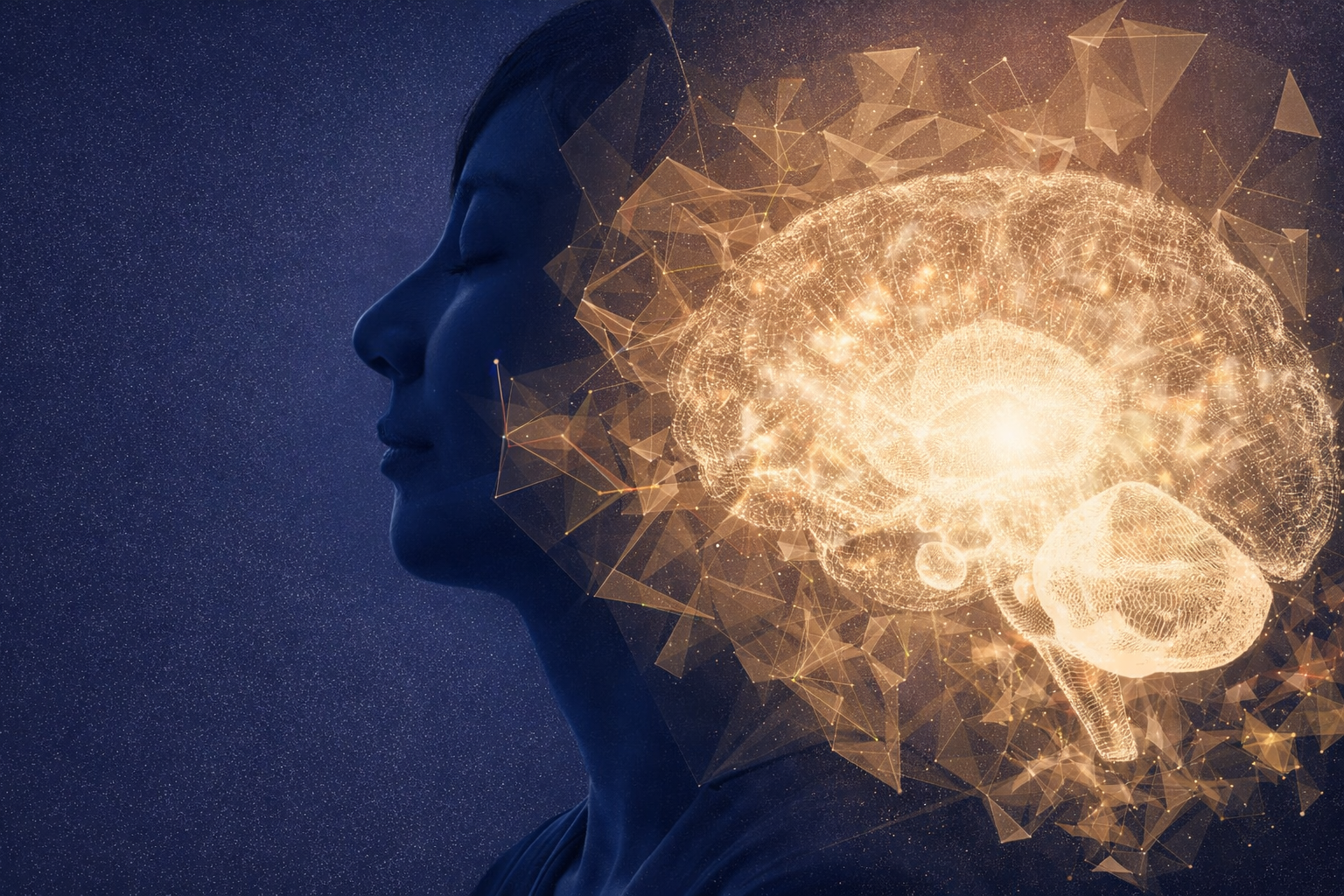
Table of contents
Ready to elevate your experience through sound?
Keys takeaways
- Sound can reorganize how the brain processes reality
- Rhythm is a cognitive lever, not just an aesthetic choice
- Altered states are measurable and designable
- From shamanic rituals to retail environments, the mechanism is the same
From ancient rituals to modern electronic music festivals, humans have long used sound to shift perception and awareness. Today, science is beginning to explain why. And perhaps more importantly, these insights are opening new possibilities for how sound can be intentionally designed, not only for artistic or therapeutic purposes, but also for meaningful, high-impact brand experiences.
A neuroscientific perspective on altered states
Altered states of consciousness are not limited to extreme or mystical experiences. They exist on a spectrum, ranging from deep focus and meditative calm to trance-like immersion. Neuroscientific research shows that auditory stimuli can play a central role in inducing such states by modulating brain activity.
One key mechanism is neural entrainment: the synchronization of brainwave frequencies with external rhythmic stimuli. When exposed to repetitive sounds or beats, the brain tends to align its electrical activity with those rhythms. For example, slow, steady pulses can encourage theta or alpha brainwave activity, which are associated with relaxation, creativity, and introspection. Faster rhythms, on the other hand, can enhance alertness and concentration.
Studies have demonstrated that these auditory-driven shifts are not merely subjective. They are observable through EEG measurements, revealing changes in neural coherence and connectivity. In other words, sound can reorganize how different regions of the brain communicate, temporarily reshaping cognition itself.
Attention, emotion and memory under the influence
The impact of sound-induced altered states extends beyond brainwaves. It directly affects three core cognitive domains: attention, emotion, and memory.
First, attention. Certain auditory environments can significantly enhance focus by reducing cognitive noise. Repetitive or immersive soundscapes help filter out distractions, allowing the brain to allocate resources more efficiently. This is why rhythmic music or ambient sound is often used to support tasks requiring sustained concentration.
Second, emotion. Sound has a privileged access to the brain’s limbic system, which governs emotional responses. In altered states, emotional processing can become amplified or reconfigured. This explains the intense emotional experiences reported in contexts such as musical trance, meditation, or collective rituals.
Third, memory. Research suggests that specific auditory conditions can improve memory encoding and recall. When the brain enters a highly synchronized or focused state, it becomes more efficient at forming lasting neural connections. This has implications not only for learning, but also for how experiences and associated messages are retained over time.
From shamanic rituals to rave culture
Long before neuroscience provided explanations, cultures around the world intuitively harnessed the power of sound to alter consciousness.
In shamanic rituals, repetitive drumming and chanting are used to induce trance states. These practices often involve rhythms in the range of 4–8 Hz, which correspond to theta brainwave frequencies. Participants report heightened imagery, emotional release, and a sense of connection beyond ordinary awareness.
Fast forward to the present, and we find similar principles at work in electronic music and rave culture. High-intensity beats, layered sound textures, and immersive audio environments can lead to collective states of euphoria and altered perception. While the cultural contexts differ, the underlying mechanisms (rhythmic entrainment, sensory immersion, emotional amplification) remain strikingly consistent.
This continuity across time highlights a fundamental truth: the human brain is inherently responsive to sound as a tool for shifting consciousness.
Designing for immersion: the role of sound design
As our understanding of auditory neuroscience deepens, sound design is evolving beyond aesthetics or branding cues. It is becoming a strategic tool for shaping experience at a cognitive level.
Modern sound design can leverage principles such as rhythm, frequency modulation, spatialization, and repetition to guide users into specific mental states. For instance:
- Slow, evolving soundscapes can promote calm and reflection.
- Pulsed rhythms can enhance focus and task engagement.
- Spatial audio can create a sense of presence and immersion, reinforcing attentional capture.
In immersive environments, whether physical installations, digital interfaces, or virtual reality, sound acts as a powerful structuring force. It directs attention, anchors perception, and influences how time is experienced.
Importantly, these effects are not random. They can be intentionally crafted based on scientific insights, allowing designers to predict and shape user responses with increasing precision.
Toward meaningful brand experiences
This brings us to a crucial question: what does all of this mean for brands?
Traditionally, sonic branding has focused on recognition: logos, jingles, and auditory signatures designed to make a brand memorable. While this remains important, it represents only a fraction of what sound can achieve.
By integrating knowledge about altered states of consciousness, brands can move from recognition to transformation. Instead of simply being heard, they can create experiences that actively shape how consumers feel, think, and engage.
Imagine retail environments where soundscapes enhance focus and decision-making. Or digital platforms where auditory cues improve information retention. Or immersive campaigns that use rhythm and spatial audio to draw audiences into a deeply engaging narrative space.
In these contexts, sound becomes a form of cognitive interface, a way of interacting directly with the user’s mental state.
Enhancing focus and retention through sound
One of the most promising applications lies in improving focus and memory retention, two key drivers of effective marketing.
If specific auditory patterns can increase attentional stability, brands can design environments that help users stay engaged longer. This is particularly relevant in a world saturated with distractions, where capturing and maintaining attention is increasingly challenging.
Similarly, by facilitating optimal conditions for memory encoding, sound can enhance how brand messages are stored and recalled. A well-designed auditory experience does not just accompany content: it reinforces it at a neural level.
This opens up new metrics for evaluating success. Beyond impressions or clicks, brands can consider cognitive impact. How well is the message retained? How deeply is the experience felt?
A new frontier for sound branding
The idea that sound can induce altered states of consciousness is no longer confined to spiritual or artistic domains. It is a scientifically grounded phenomenon with far-reaching implications.
As neuroscience continues to uncover the mechanisms behind auditory influence, sound design stands at the intersection of art, science, and technology. It offers a unique opportunity to create experiences that are not only engaging but transformative.
For brands, this represents a shift in perspective. Sound is not just an accessory: it is a powerful medium for shaping perception, enhancing cognition, and ultimately redefining how audiences connect with the world.
And if sound can indeed transform our way of being, then the question is no longer whether to use it, but how far we are willing to explore its potential.